- 4176 + containers delivered
- Serving Baltimore County
Common Baltimore jobs
Baltimore projects need containers matched to access
These are the jobs most often discussed with Baltimore property owners. The material, building layout, and placement location matter as much as the project name.
Home Cleanout Dumpsters
For Baltimore rowhomes, apartments, and older detached houses, describe furniture, plaster, flooring, and boxed contents before choosing a tier. Tight doorways and curb access can change loading plans.
Household cleanupGarage, Basement and Attic Dumpsters
Baltimore basements and detached garages often hold dense, mixed materials. Account for stairs, alley approach, low ceilings, and the distance between the cleanout area and container.
Storage cleanoutsMoving and Estate Cleanout Dumpsters
A Baltimore move or estate cleanout may combine furniture, clothing, fixtures, and accumulated household goods. Confirm the property entrance, parking situation, and intended pickup location before loading begins.
Move preparationYard Waste Dumpsters
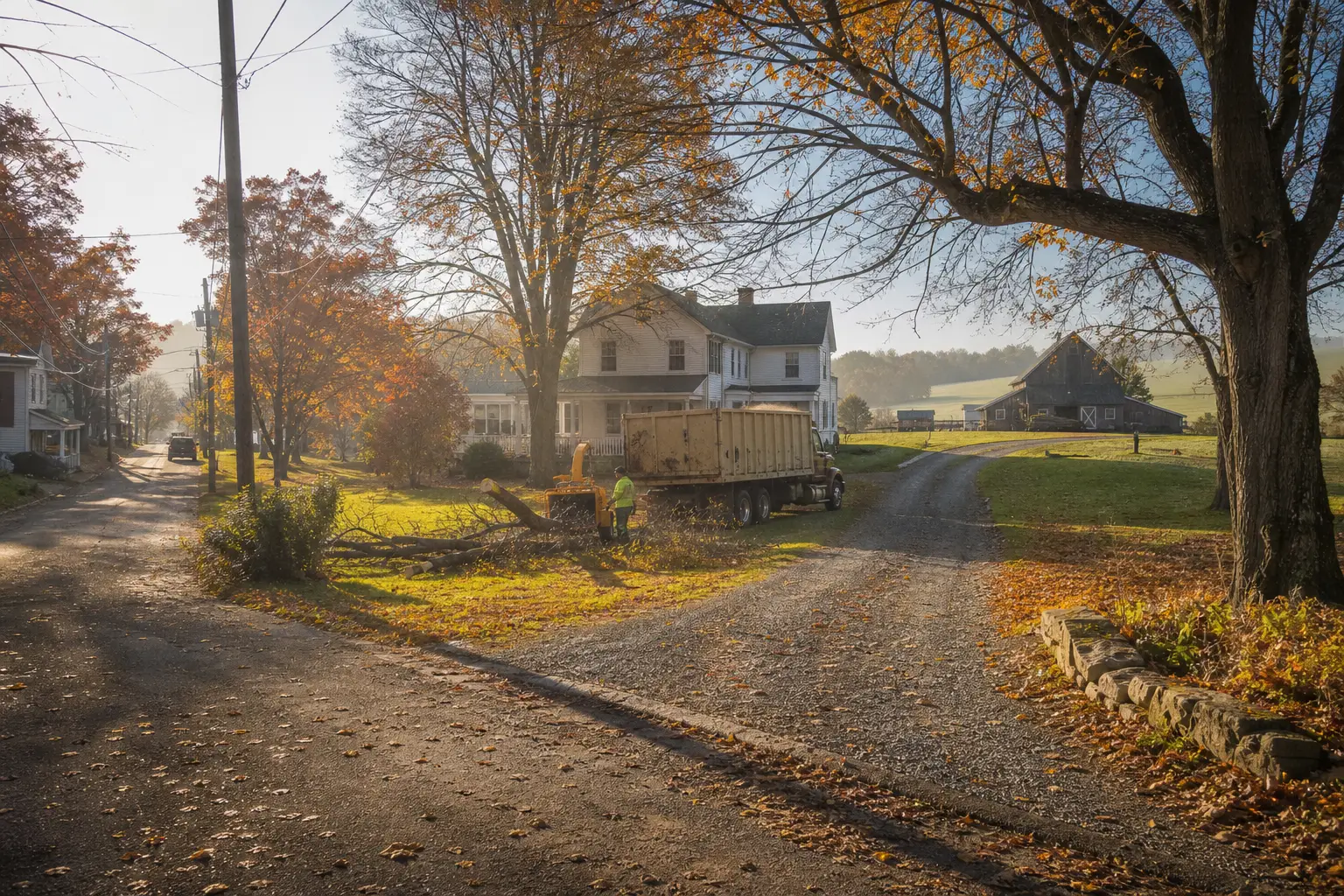
For Baltimore lots, pruning, storm cleanup, and landscaping debris need a container placed where gates, fences, parked cars, and soft ground will not interfere with delivery.
Outdoor debrisKitchen and Bathroom Renovation Dumpsters
Baltimore rehabs commonly produce cabinets, tile, plaster, drywall, fixtures, and flooring. Separate unusually heavy material in your description so the container suits the demolition plan.
Renovation debrisRoofing Debris Dumpsters
Roof work on Baltimore rowhomes and detached houses needs a practical position near the building without blocking neighbors, sidewalks, utility access, or the roofer's staging area.
Roofing projects
Baltimore placement
Baltimore streets change how dumpsters get placed
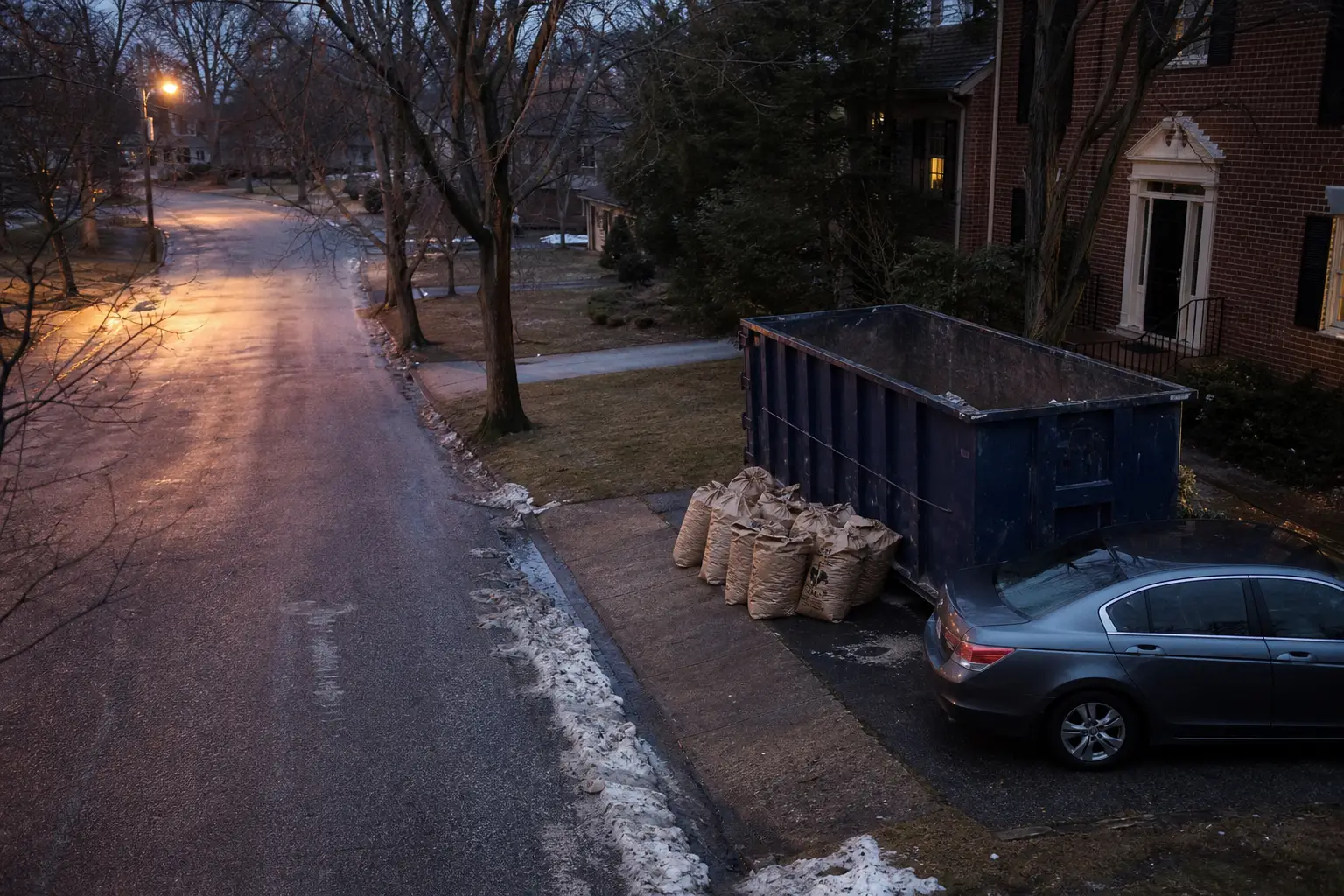
Baltimore's dense rowhome blocks often leave little separation between a front door, sidewalk, parked vehicles, and the street. A container that fits a suburban driveway may not work beside a narrow curb or an alley entrance. Before scheduling, the crew needs to know whether the property sits on a corner, shares an alley, uses a rear parking pad, or depends on a public street. That information affects truck approach, clearance, surface protection, and whether another location on the lot makes more sense. Photo-confirmed placement helps document the agreed position before delivery, rather than leaving the driver to improvise around parked cars or low branches.
Older Baltimore housing brings another consideration: renovation debris can be heavy even when the pile looks small. Brick, plaster, roofing material, bathroom fixtures, and soil can load a container faster by weight than by space. Newer rehabs may have cleaner access through a rear lot, while older rowhomes may require debris to travel through a narrow doorway or down steps before reaching the container. Describe the material, not just the room being cleared. That gives the crew a better basis for matching the tier and explaining loading limits before the truck is dispatched.
Weather also affects placement across Baltimore. Freeze and thaw can soften unpaved rear lots, while summer storms can move loose materials toward storm drains or neighboring properties. A container should sit on a firm, usable surface with enough clearance for loading and pickup. On sloped streets, hills, or lots with broken pavement, tell us what the truck will encounter. White Marsh is the dispatch base, but the practical question is always the same: where can the container sit without blocking access, damaging a surface, or creating a problem for pedestrians and traffic?
Before the truck arrives
Prepare your Baltimore property for delivery
- Measure the Baltimore driveway, curb space, or alley approach and remove vehicles from the planned path.
- Tell us whether Baltimore placement is on pavement, gravel, grass, a rear pad, or a shared drive.
- Separate heavy brick, plaster, roofing, soil, and concrete details from ordinary household debris.
- Clear Baltimore sidewalks, gates, low branches, utility access, and loading areas around the intended location.
- Keep prohibited materials out and have property or street placement permission ready when applicable.
Placement before delivery
Check the landing spot before Baltimore delivery
On a Baltimore street, curb space is not automatically available just because a vehicle can park there. Look at the full approach from the truck's direction, including parked cars, signs, tree limbs, utility lines, sidewalk width, and the distance to the work area. A container on a public street usually needs town permission first; tell us where it has to sit and we will explain what applies. Shared drives need agreement from the other users, especially in rowhome rear lanes and small residential lots. Do not assume an alley can handle the truck simply because ordinary cars use it. Width, turning room, pavement condition, and overhead clearance all matter.
Commercial lots create a different set of checks. The property manager, owner, or site supervisor may control where a container can sit, and active loading zones cannot always be used. Keep access clear for deliveries, emergency routes, customer parking, and neighboring tenants. Baltimore's older commercial corridors may have uneven pavement, narrow service areas, or doors that open toward the proposed placement. Send the address, surface type, access notes, and a photo of the intended spot when discussing the job. If the location changes after confirmation, explain that before delivery so the truck is not forced into an unsafe or unsuitable position.
Baltimore rental questions
Answers for Baltimore dumpster projects
How do I place a dumpster on a Baltimore street?
A Baltimore street placement usually requires checking town permission before the container arrives, and curb availability does not guarantee approval. Tell us the exact block, side of street, nearby signs, parking conditions, and intended dates so placement can be discussed accurately. Keep vehicles moved from the approach and have any property or street authorization ready before delivery.
What dumpster size fits a Baltimore rowhome renovation?
A 10-Yard container may fit a small Baltimore bathroom or kitchen update, while a 15-Yard or 20-Yard tier is more appropriate for broader remodeling debris. Brick, plaster, tile, and roofing material can fill weight limits quickly, even when the pile is not large. Describe the rooms, materials, stairs, alley access, and available curb or rear-lot space before choosing.
Can a dumpster go in a Baltimore alley or shared drive?
It can sometimes work, but an alley or shared drive must have enough width, turning room, surface strength, and clearance for the delivery truck. Baltimore rear lanes may be tighter than they appear from a passenger vehicle. Get agreement from other users, move parked cars, check low branches, and provide access details before the placement is confirmed.
How should I prepare a Baltimore property for dumpster delivery?
Clear the planned Baltimore route of vehicles, branches, gates, loose materials, and other obstructions, then identify a firm surface with room for loading and pickup. Rowhome blocks may require curb coordination, while rear lots may have soft ground or narrow gates. Tell us the surface, access route, nearby utilities, and whether the location is shared before delivery is scheduled.
How far ahead should I arrange a Baltimore dumpster?
Arrange a Baltimore dumpster as soon as the project location, debris type, access route, and preferred placement are known. Scheduling depends on the tier, truck access, site conditions, and whether street or property permission must be checked. Have the address, project dates, material list, photos, and a backup placement area ready when discussing the job.
Discuss the Baltimore job before loading starts
Have the Baltimore address, debris type, preferred placement, access concerns, and project timing ready. Alton Dumpster Rental can help sort through the practical details before the container is dispatched.
Click Here to Call(667) 409-3478Baltimore service area
Dumpster delivery across Baltimore neighborhoods
Alton Dumpster Rental handles container placement for Baltimore homes, renovations, cleanouts, and commercial properties across different street layouts. Dense blocks, hillside approaches, rear alleys, and mixed-use corridors each require different access notes. The trucks come from White Marsh, and the useful details are the exact address, debris type, surface, and delivery route. Availability is 24/7, Monday to Sunday, subject to confirming a workable placement and pickup plan.